
INT_MANTO
.
Ficha Técnica
ARQUITETURA: ELIZA SCHUCHOVSKI
INTERIORES: ELIZA SCHUCHOVSKI
CONCLUSÃO: 2025
LOCALIZAÇÃO: CURITIBA – PR
CONCEPT
Casa Manto reflects the lifestyle of a family that values warmth, togetherness, and authenticity. The name refers to a place of protection, belonging, and identity. In Portuguese, the word manto carries a symbolic meaning of shelter, but it is also commonly used in football culture to refer to the team’s jersey. This dual connotation captures the essence of the house, a family retreat that expresses both the passions and the personal history of its residents. Designed for a Brazilian football player, his wife, and their two young children, the residence balances the intensity of the sport with moments of rest and family life. Having lived in different cities and countries throughout the athlete’s career, the family sought a home that would reflect their experiences while offering comfort, flexibility, and authenticity. Both the architectural and interior design projects were developed by Schuchovski Arquitetura in a fully integrated process. The design originated from the scale of the furniture, with flows, spatial layout, and finishes defined from the earliest sketches. This approach, in which architecture becomes a natural consequence of interior design, resulted in a home conceived from the inside out, uniting function, materiality, and identity in a single gesture. More than a residence, Casa Manto is a contemporary refuge that celebrates belonging, leisure, and family essence, a home shaped by sensitivity to the stories and passions of those who inhabit it.
BRIEFING
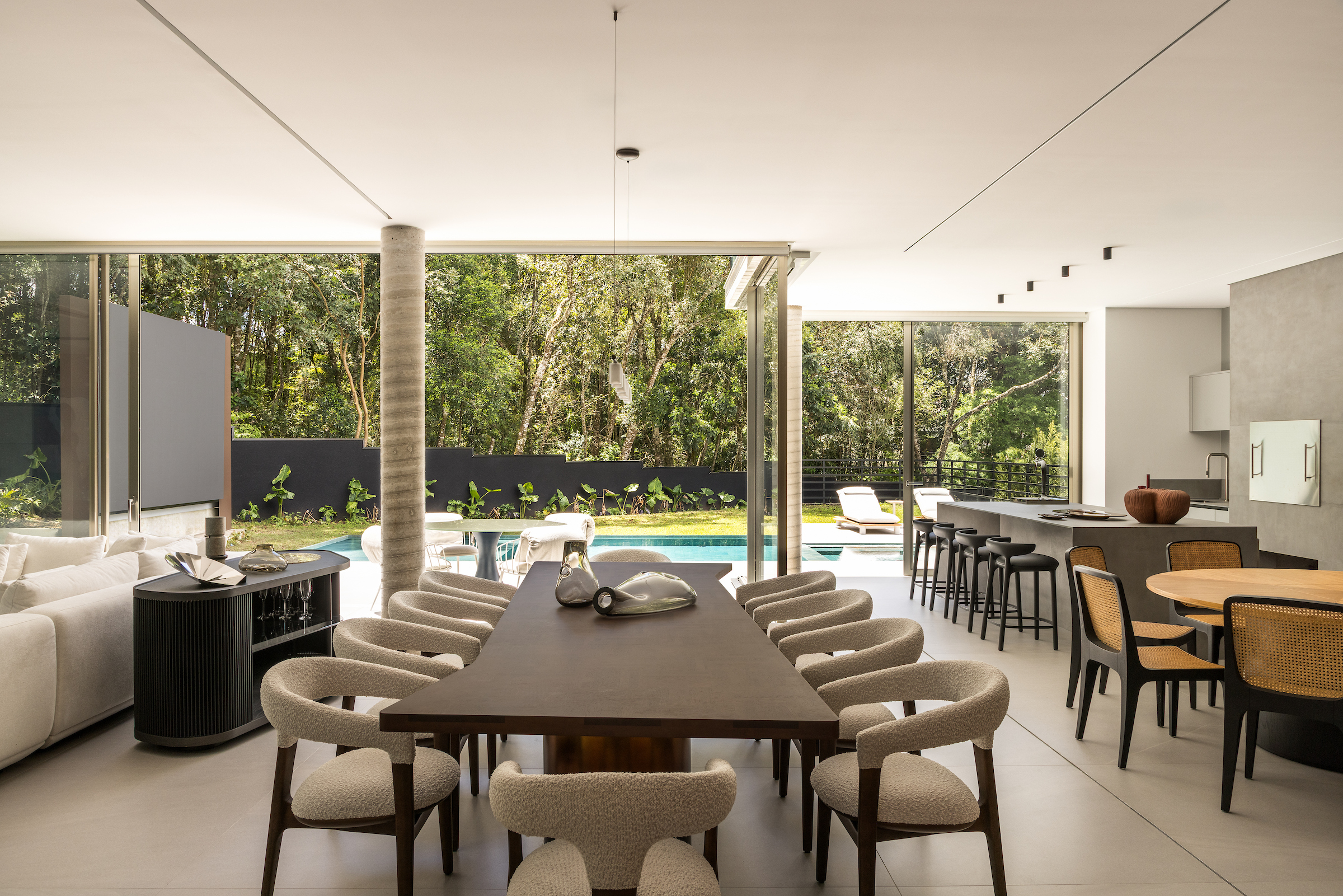
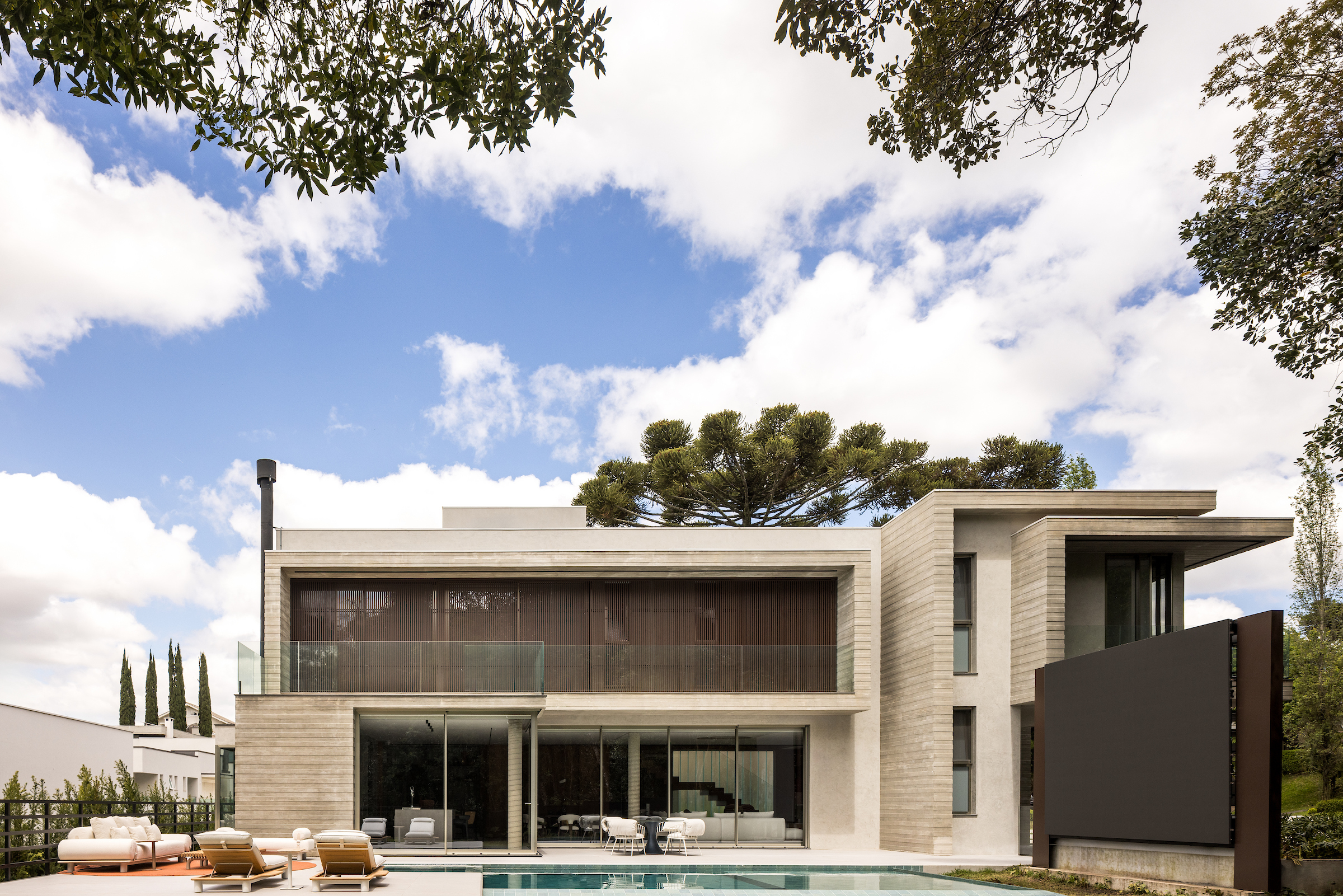
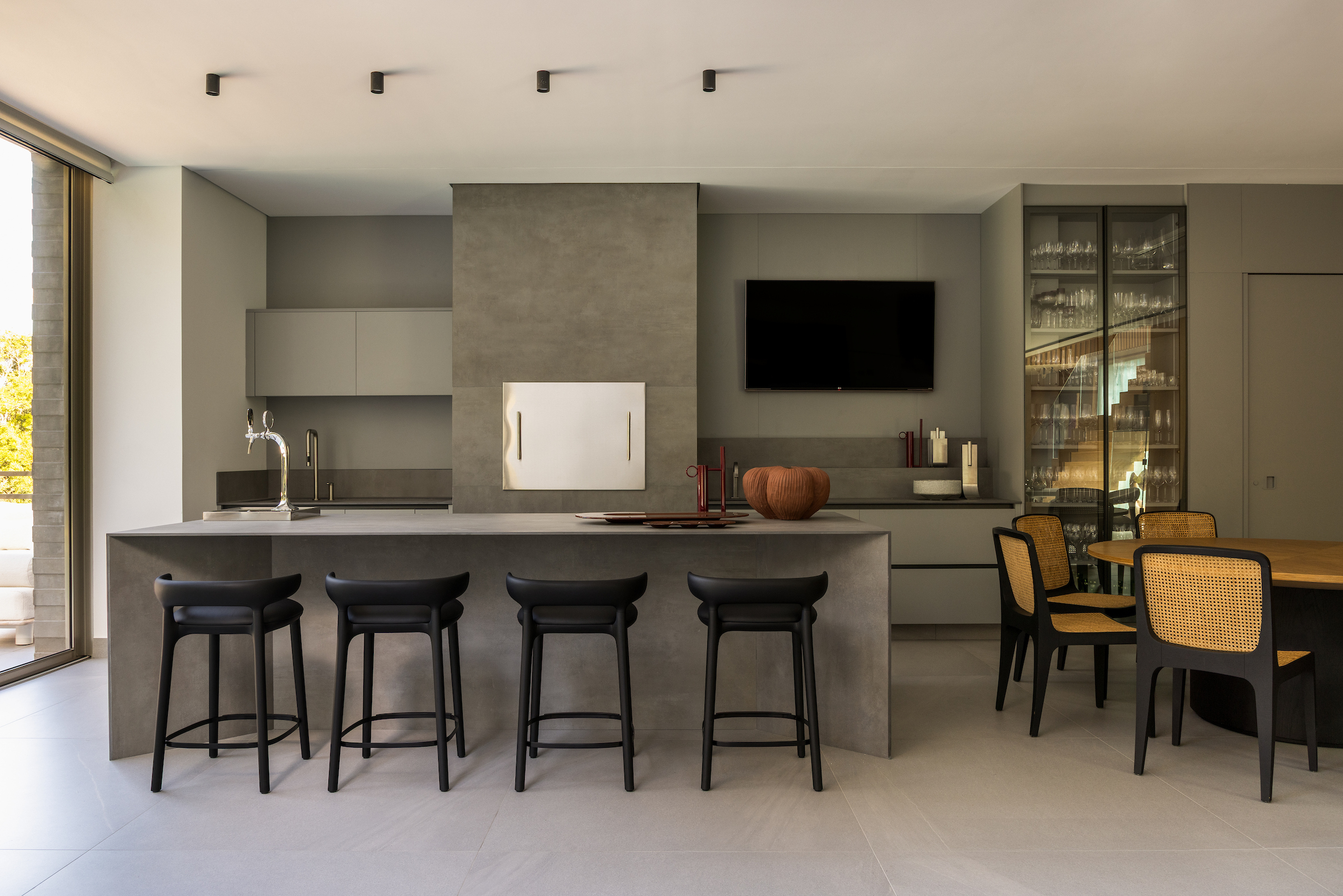
Located in Curitiba, Brazil, Casa Manto sits in a quiet and well-established residential area, with easy access to schools, shops, restaurants, and shopping centers. This privileged location provides the ideal balance between privacy and convenience, allowing the family to enjoy a peaceful routine without giving up urban comfort and accessibility. The residence was designed for a family that values well-being, social interaction, and an active lifestyle. The couple envisioned a functional and welcoming home that could accommodate family life and also serve as a space to host friends and guests. The social areas connect directly to the pool and gourmet space, which became the heart of the home. The outdoor screen facing the pool creates a meeting point for watching football matches, reinforcing the home’s role as a social hub. The sauna and heated jacuzzi were conceived as part of the client’s athletic recovery routine, offering relaxation and well-being after training sessions. Casa Manto was designed to embrace the client’s passions and hobbies in every detail. Beyond football and gatherings with friends, the house also accommodates his collections, such as approximately 200 Funko Pop figures, displayed in a custom-designed shelving unit in the playroom, which opens to the living area, bringing the collection to the heart of the home. His collection of around 250 pairs of limited-edition sneakers is showcased in a dedicated walk-in closet designed as an exhibition space, transforming functionality into a personal expression of identity. The result is a house conceived from the inside out, where architecture and interiors are seamlessly intertwined, reinforcing the office’s philosophy of translating identity into spatial design.
PROGRAM LAYOUT
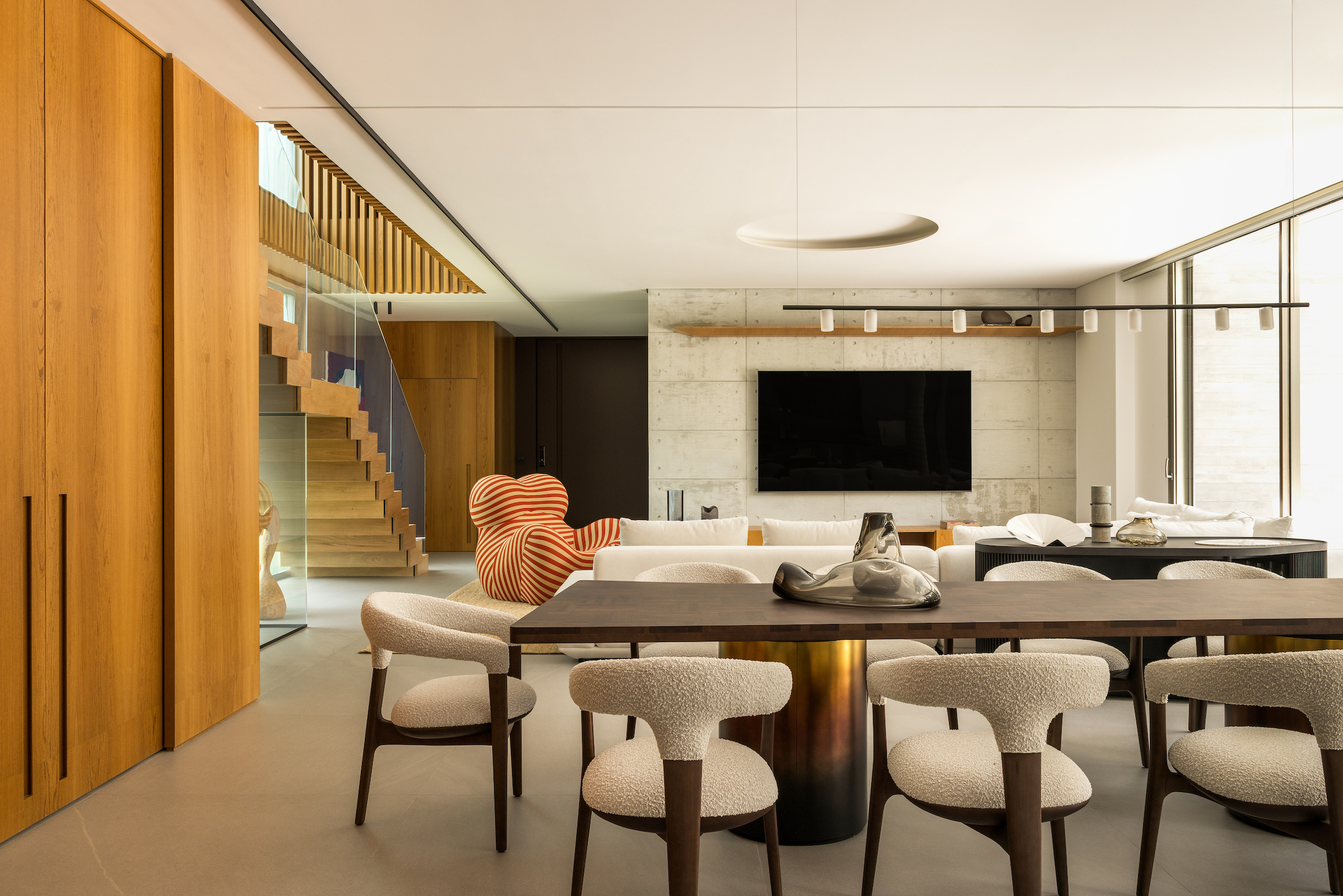
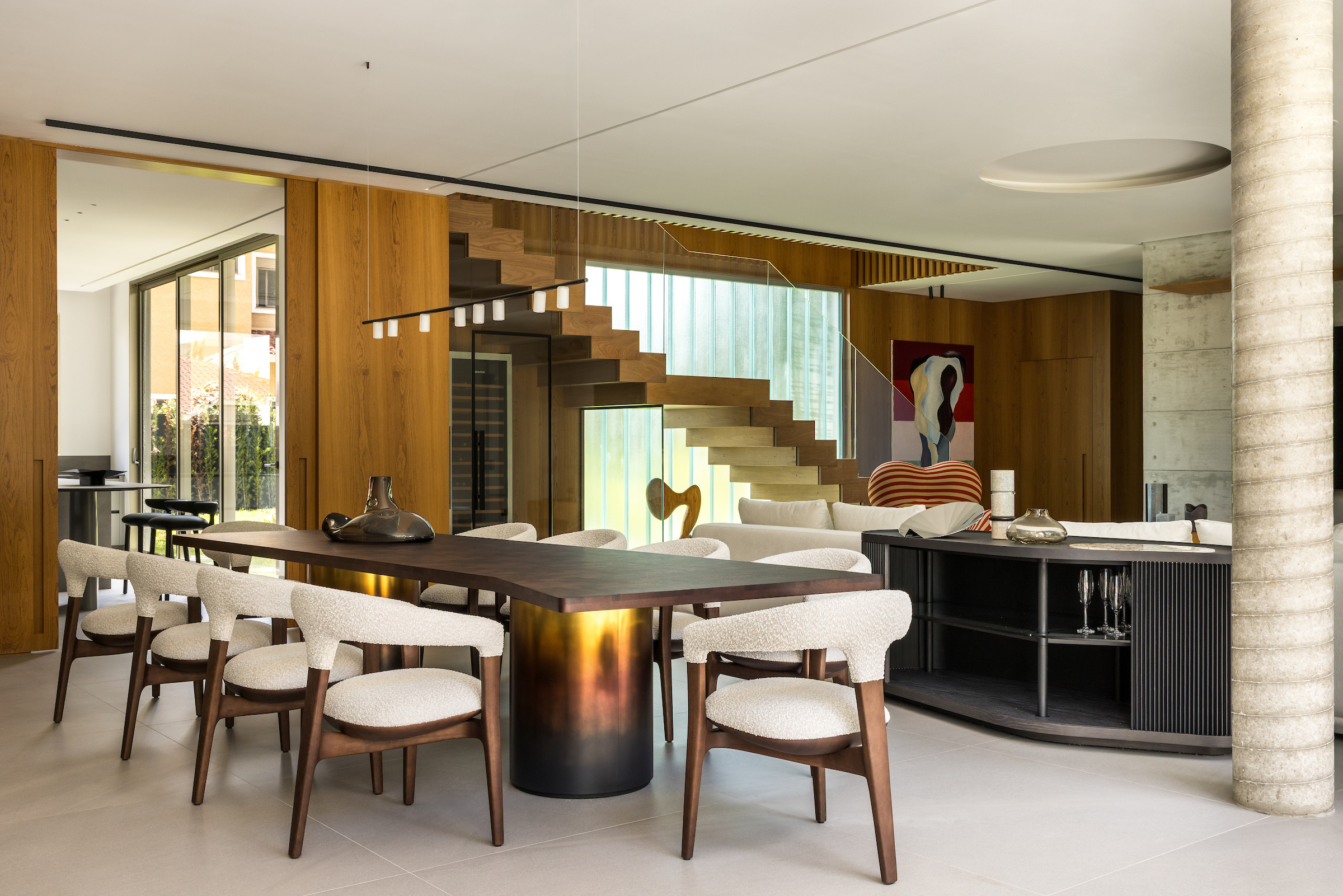
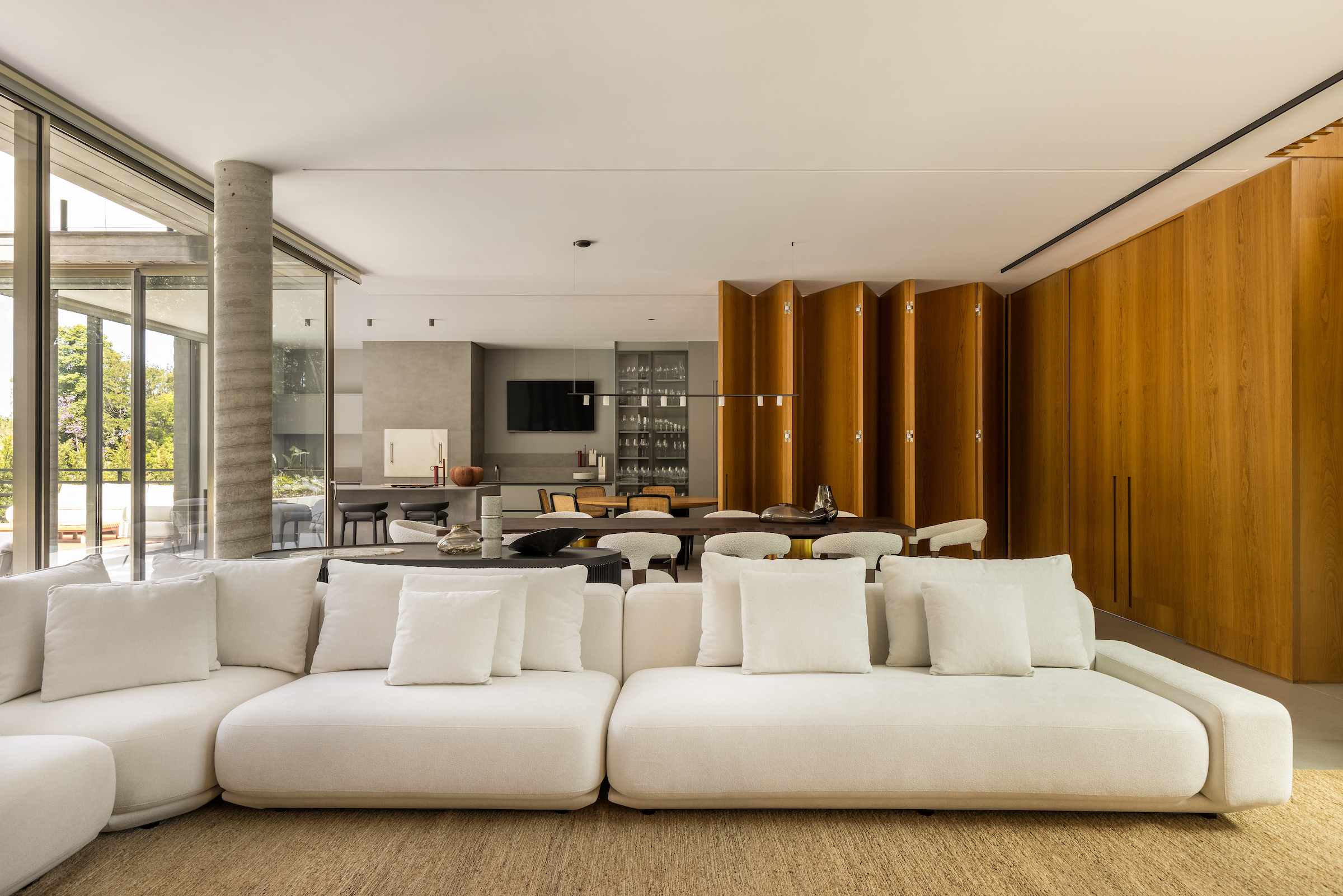
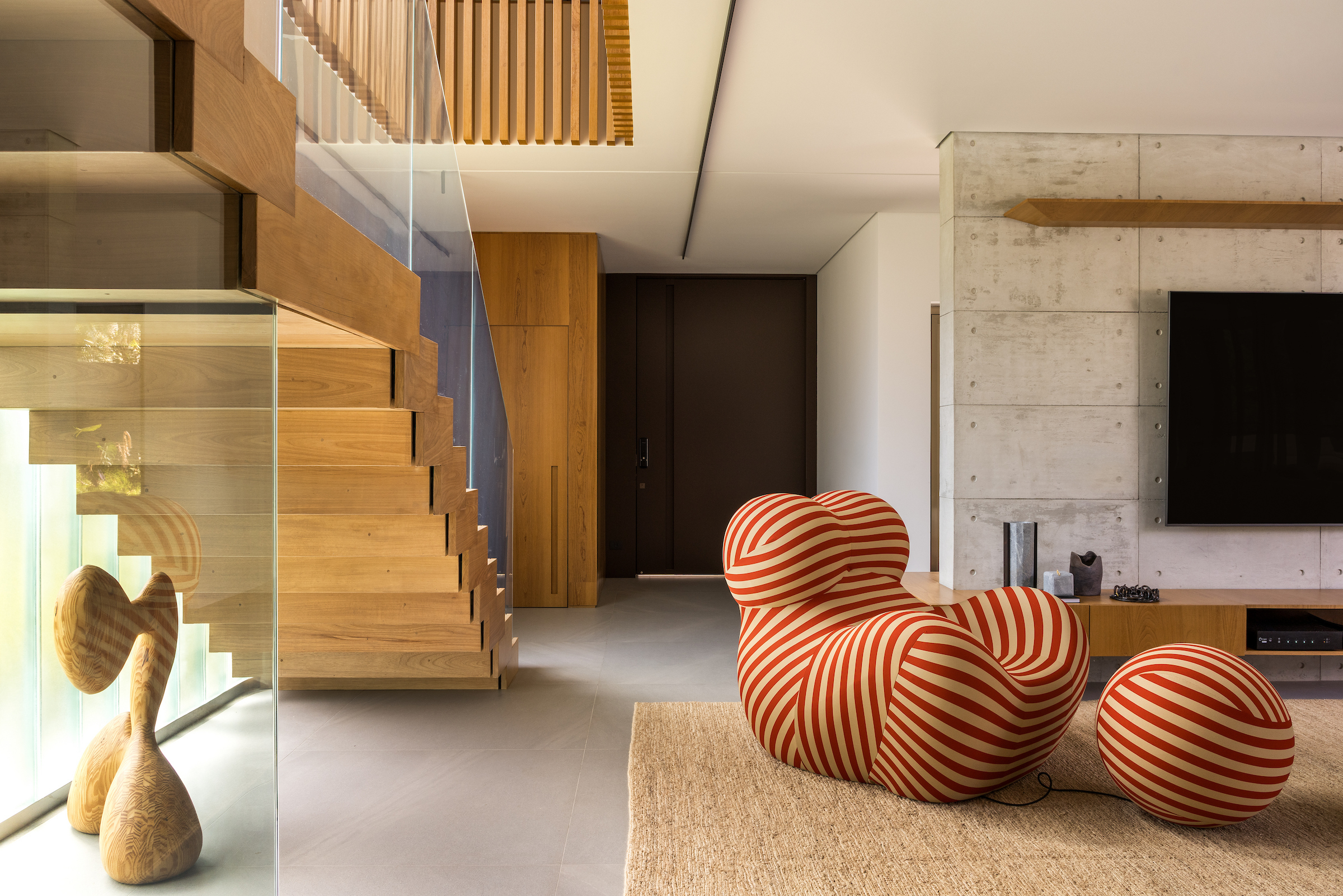
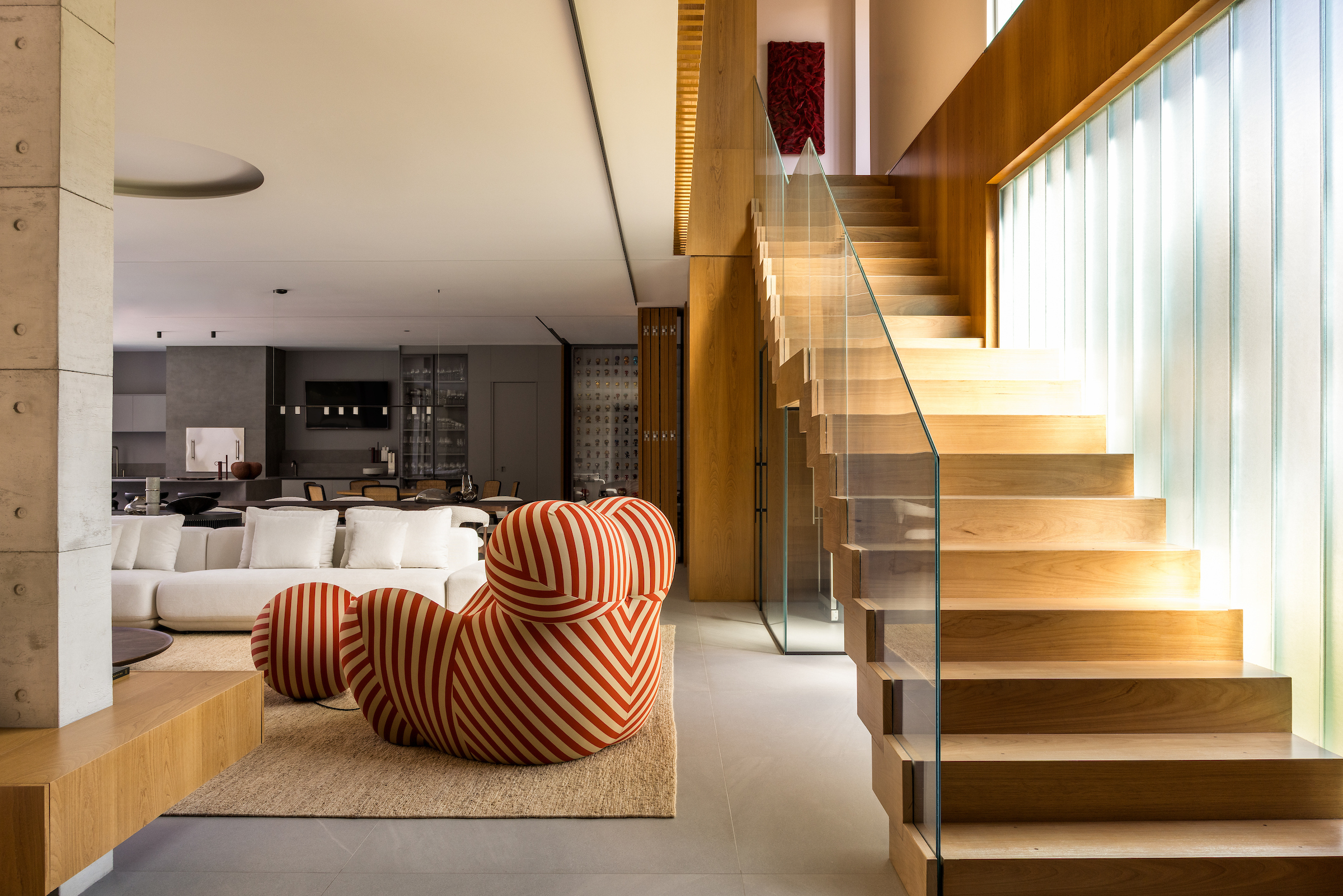
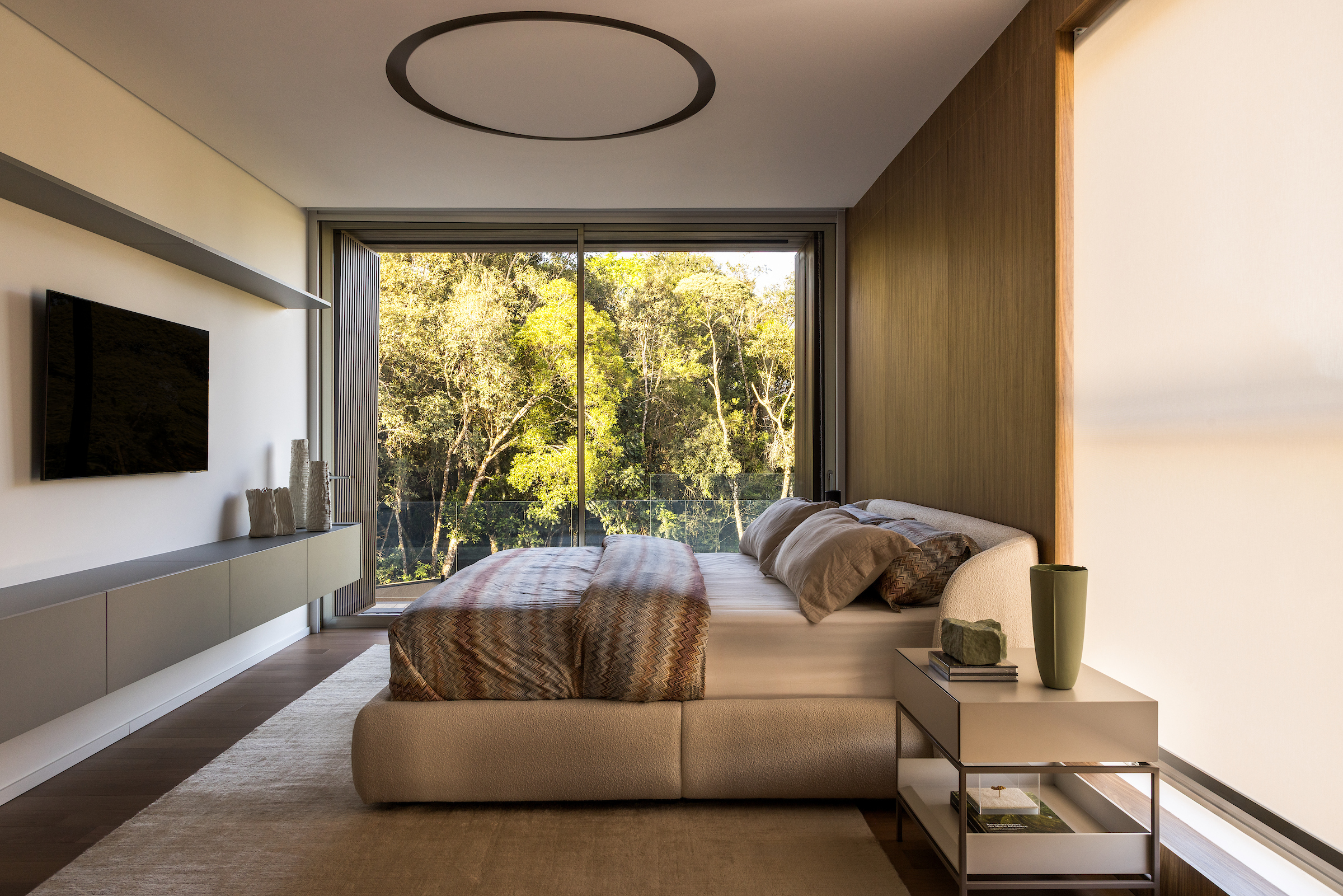
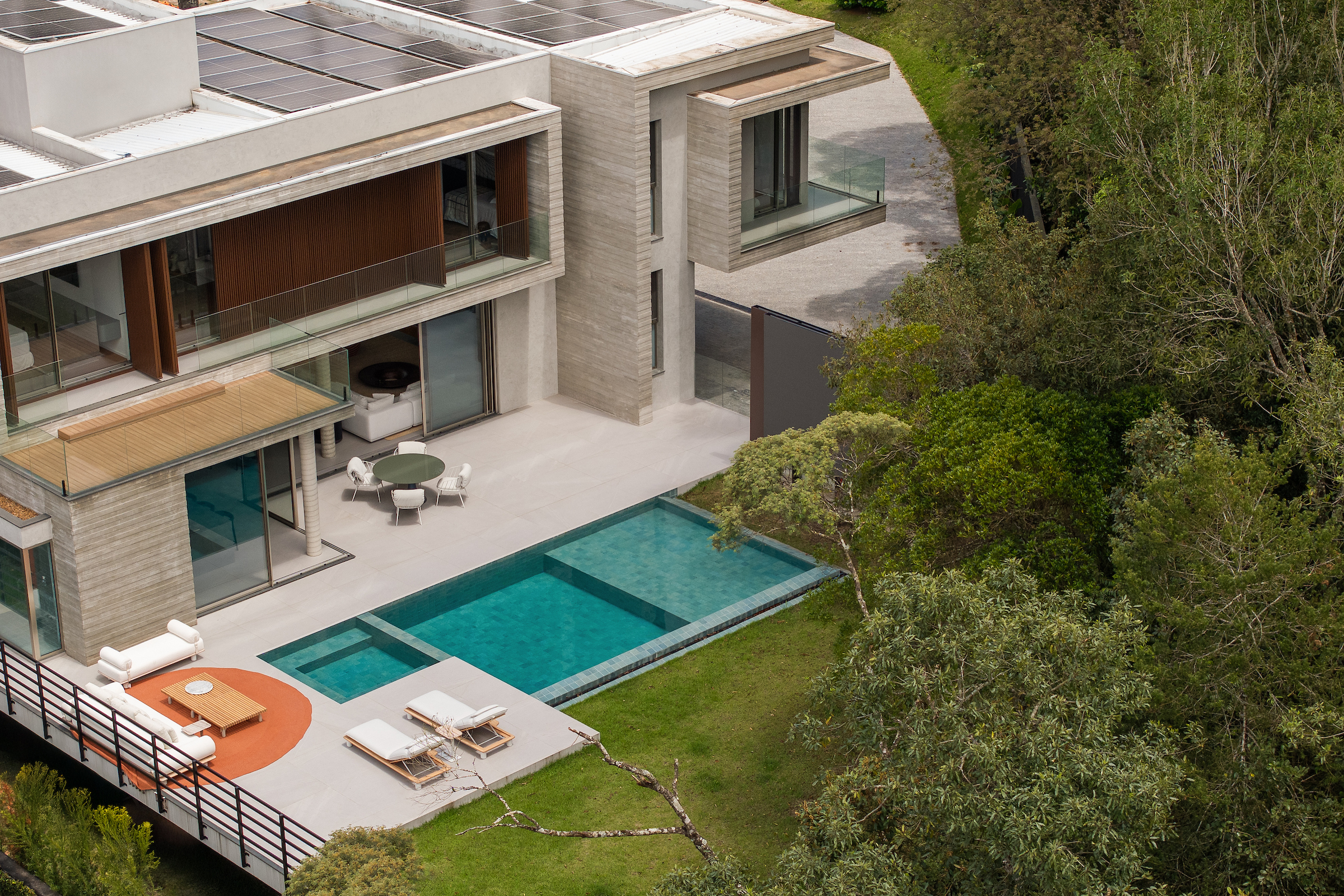
The residence is organized across two distinct levels, with clear zoning between social and private areas. On the ground floor, the kitchen, living room, and gourmet space are fully integrated, creating a fluid environment where daily life and leisure merge naturally. This spatial integration, planned from the earliest design stages, reflects the studio’s methodology of designing from the furniture scale outward. Floor-to-ceiling windows open completely, blurring the boundaries between interior and exterior and extending social life to the poolside area. A freijó wood folding door allows the residents to control the level of openness between spaces, providing flexibility between moments of gathering and privacy. The staircase occupies a central position and becomes a sculptural transition between the social and private sectors. The upper floor is dedicated to the family’s private quarters, ensuring comfort and intimacy. All bedrooms face the interior garden and pool, enhancing privacy while maintaining a connection with nature. Each room follows the same material and aesthetic language as the rest of the house, ensuring unity while reflecting the individuality of each resident. Replacing a conventional railing, a freijó wood slatted structure continues the home’s palette, bringing warmth to the upper level while maintaining visual permeability, safety, and lightness.
MATERIALS
Casa Manto is defined by a material language that combines strength and delicacy. Exposed concrete was intentionally embraced as an integral part of the interior design, reinforcing the seamless relationship between architecture and interiors. Beyond its structural role, concrete becomes an aesthetic element, embodying the contemporary character desired by the clients. In contrast, natural freijó wood adds warmth and comfort, unifying the spaces through a cohesive and organic palette. U Glass was applied along the staircase, allowing soft natural light to filter in while preserving privacy, complementing the home’s contemporary character. Metal details, black steelwork, and subtle furniture accents introduce the black tone, a discreet reference to the client’s favorite team, without overpowering the composition. The neutral palette of grays and beiges, combined with tactile materials, ensures balance and timelessness. Every material choice reinforces the harmony between structure, function, and aesthetics, resulting in a home where architecture and interiors coexist seamlessly.
FURNITURE
Furniture was the starting point of Casa Manto’s development. The home was designed from the inside out, with layout and proportions defined by the pieces that inhabit each space. The architectural and interior design evolved simultaneously, following the same spatial and aesthetic logic.
One of the client’s first wishes was that the house would contain and embrace the UP chair by Gaetano Pesce in its exact color configuration, as a reference to his favorite football team. From this piece, the studio established the atmosphere of the entire home and guided the curation of all other furniture. Every selection was made to complement, not compete with, the chair, creating an environment of balance and harmony. The resulting composition combines minimalist lines, sometimes organic, sometimes rectilinear, achieving an equilibrium that conveys both lightness and personality.
The curated selection includes pieces by Brazilian designers with whom the client feels a personal connection, reinforcing the bond with national craftsmanship and identity. Outdoor furniture was chosen for comfort and durability, allowing family and guests to enjoy the poolside and watch matches on the outdoor screen with the same coziness and design quality as the interiors. In every decision, the studio reaffirms its philosophy of designing from the furniture scale, establishing a natural continuity between architecture and interior design.
LIGHTING
The lighting design was conceived to enhance materiality and create different atmospheres throughout the day. The project plays with recessed and no-frame solutions, alternating linear profiles, technical lighting, and surface-mounted fixtures in a precise and contemporary composition.
Circular recessed fixtures in the ceiling provide soft, diffuse light that creates a warm and adaptable ambiance. The dimmable system allows the residents to modulate intensity according to each occasion, following the rhythm of the house. Lighting was designed to build layered scenarios, cozy and intimate in social and private spaces, yet technical and focused in specific functional areas. In the main spaces, light accentuates the contrast between concrete and wood, revealing textures and depth. Indirect lighting integrated into panels and coves reinforces visual continuity, comfort, and the harmonious dialogue between architecture and interiors.
SECURITY AND SUSTAINABILITY
Casa Manto was conceived with a focus on energy efficiency, thermal comfort, and local production. The building orientation maximizes sunlight, reducing artificial lighting needs, while photovoltaic panels on the roof supply part of the home’s energy consumption. Large window openings allow cross-ventilation and constant air renewal.
Durable, low-maintenance materials such as concrete, wood, and glass ensure longevity and minimize environmental impact. The use of Brazilian-designed furniture underscores the project’s sustainable commitment by supporting local craftsmanship and the creative economy. An integrated automation system manages lighting, climate, and security, ensuring daily comfort and operational efficiency.
PURPOSE
Casa Manto is a faithful portrait of its residents. Every detail reflects their way of living, their memories, and their passions. The architecture adapts to the athlete’s routine and family life, merging function and emotion into a unified design gesture. More than a residence, it is a contemporary refuge that embraces the intensity of sport, the lightness of social life, and the beauty of what is essential, a place of belonging where concrete, wood, and light come together under the same manto.